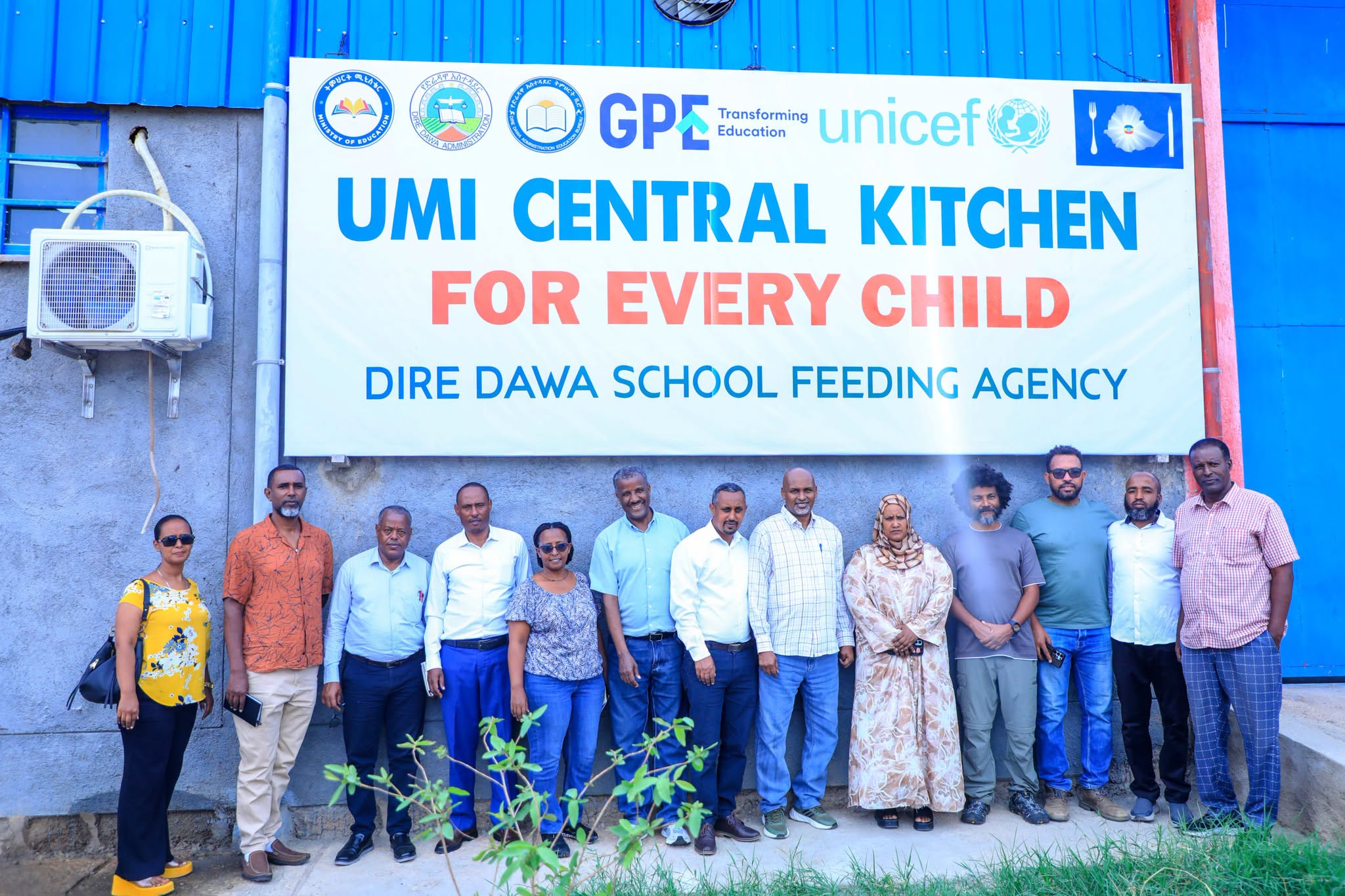
In a landmark achievement for educational and nutritional welfare, the Ethiopian School Meals Initiative (ESMI), in strategic collaboration with UNICEF and the Dire Dawa City Administration, has officially conducted the partial handover of the first phase of a transformative school feeding project. Operating under the guiding theme, "Sustainable School Feeding Budget for Better Education," the initiative introduces a groundbreaking new model to the region. Departing significantly from traditional, short-term feeding practices, this ESMI-led initiative is being hailed as the first exemplary project of its kind in the country. The pioneering model is uniquely designed around core, sustainable pillars: institutional independence, deep-rooted local ownership, environmental protection, and robust, verified legal and financial frameworks. The comprehensive, climate-resilient program features a state-of-the-art centralized cooking facility with the capacity to nourish up to 10,000 students every single day. Ensuring complete self-reliance, this kitchen is integrated with a climate-smart agricultural farm equipped with a newly developed deep water well and an advanced drip irrigation system. Crucially, the Dire Dawa City Administration has matched ESMI’s operational efforts by laying a massive foundation for the program's long-term sustainability. The city has officially committed to allocating 3 percent of its annual budget specifically for school feeding. Furthermore, they have established an independent School Feeding Agency and set up a dedicated Trust Fund to ensure continuous financial and administrative support. Looking ahead, this successful implementation is just the beginning. According to officials from the Ethiopian School Meals Initiative (ESMI), strategic planning and preliminary works are already actively underway to expand this highly successful, sustainable model to other regions across Ethiopia.
News & Insights
ESMI Hands Over First Phase of Pioneering School Feeding Model in Dire Dawa, Setting a New National Standard
ESMI in partnership with UNICEF and local government, has handed over the first phase of a pioneering, climate-smart school feeding project.
ESMI in partnership with UNICEF and local government, has handed over the first phase of a pioneering, climate-smart school feeding project.
Keep Reading